
 By admin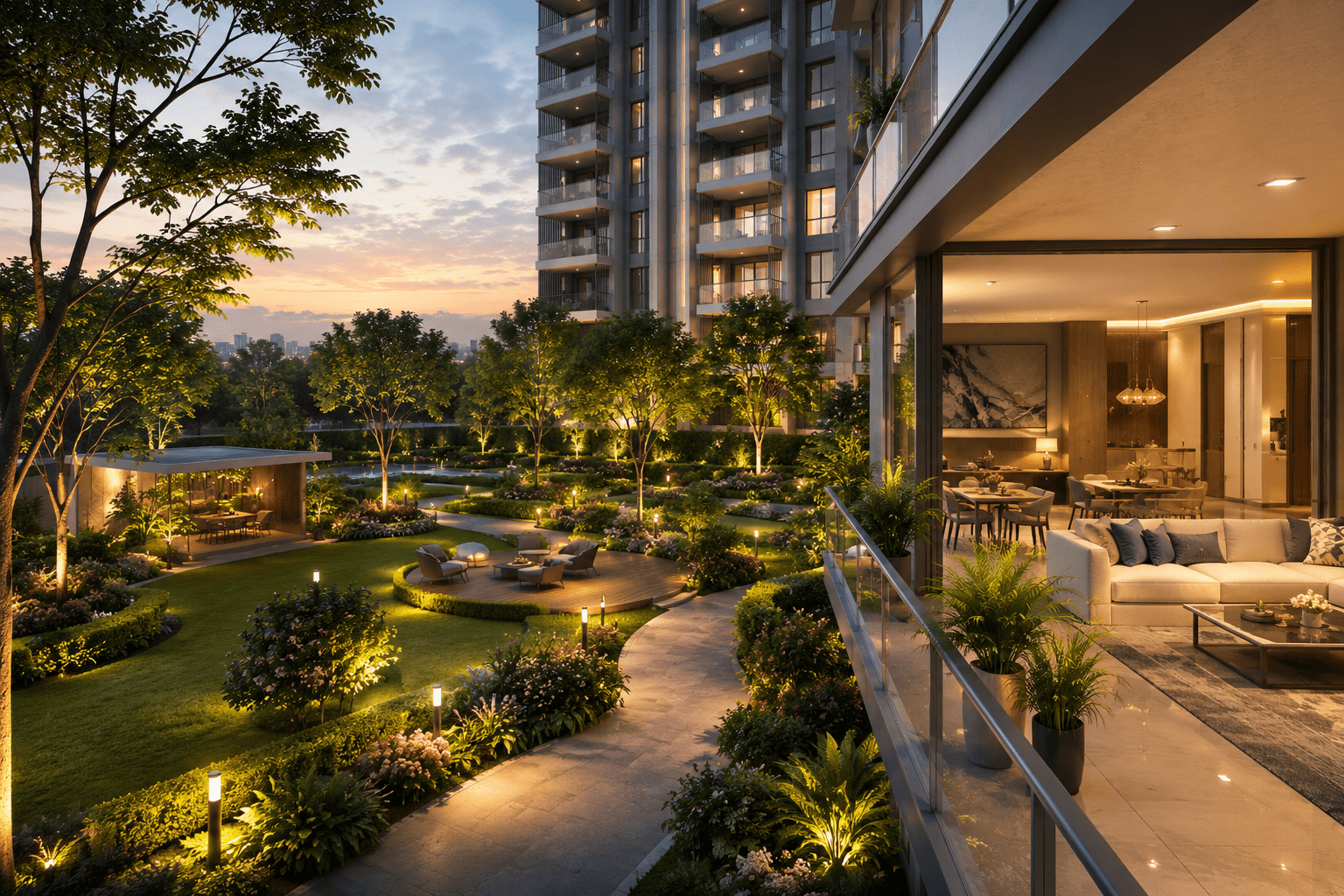
Bangalore real estate growth in 2026 continues to show strong momentum, supported by end-user demand, premium housing launches, infrastructure expansion and steady interest from working professionals. The city remains one of India’s most active residential markets because of its IT economy, startup ecosystem, global capability centres, airport corridor growth and improving metro connectivity. For homebuyers and investors, 2026 is not just about buying property at any location; it is about choosing the right micro-market, right developer and right price point.
According to Knight Frank India data reported by ETRealty, Bengaluru recorded housing sales of 27,968 units in H1 2026, showing a 5% year-on-year increase. New launches also rose 4% to 34,749 units during the same period. This shows that buyer demand is still active, even though affordability pressure and rising prices have made buyers more selective. Average residential prices in Bengaluru increased 9% year-on-year to ₹9,354 per sq.ft. in H1 2026, compared with ₹8,906 per sq.ft. in 2025.
Price Trends in Bangalore Real Estate 2026
The biggest trend in Bangalore real estate in 2026 is price appreciation across key micro-markets. Demand is no longer limited to affordable homes. Buyers are showing strong interest in premium and larger apartments, especially in well-connected locations. JLL reported that residential prices across India’s top seven cities rose 8% to 20% year-on-year in Q1 2026, with Bengaluru among the markets seeing more than 12% price growth.
This price growth is mainly driven by rising land costs, construction costs, demand for branded projects and preference for better amenities. Buyers today want spacious homes, clubhouse lifestyle, green spaces, security, better planning and strong connectivity. Because of this, developers are launching more premium and high-end projects instead of only budget housing.
In Bengaluru, the ₹1 crore to ₹2 crore segment accounted for the largest share of sales in H1 2026, while the ₹2 crore to ₹5 crore segment also showed strong growth in launches. This clearly shows premiumisation in the market. Buyers are willing to pay more for good locations, trusted developers and better lifestyle features.
Key Growth Corridors in 2026
Bangalore’s real estate growth is now spread across multiple corridors. North Bangalore, East Bangalore, Sarjapur Road, Whitefield, Devanahalli, Thanisandra, Hosa Road, Bannerghatta Road and Electronic City continue to attract buyer interest. Each location has its own growth reason.
North Bangalore is gaining attention because of Kempegowda International Airport, KIADB Aerospace Park, Devanahalli Business Park, Bellary Road and upcoming infrastructure. Knight Frank data reported by ETRealty said North Bengaluru was the fastest-growing residential corridor in the city in H1 2026, with launches rising 10% and sales rising 11% year-on-year.
East Bangalore apartments remains strong because of Whitefield, KR Puram, Marathahalli, ITPL and metro connectivity. KR Puram recorded 20% price growth over 12 months, followed by Yelahanka at 18%, Tumkur Road at 16%, Marathahalli at 15% and Whitefield at 14%, according to the same report.
Sarjapur Road and Hosa Road are also becoming preferred choices for working professionals because they connect to major employment hubs such as ORR, Electronic City, Bellandur, Whitefield and HSR Layout. These locations are popular among buyers looking for future appreciation and rental demand.
New Developments and Buyer Preferences
In 2026, new developments in Bangalore are becoming larger, more premium and more lifestyle-focused. JLL noted that Bengaluru’s residential supply hit an all-time quarterly record of about 27,000 units in Q1 2026, with launches mainly targeting premium and high-end buyers. Whitefield led new launches, followed by Bellary Road and Hosur Road submarkets.
New projects are now offering larger apartments, township-style planning, big clubhouses, landscaped open spaces, smart-home features and stronger security systems. Buyers are also comparing projects based on RERA status, developer reputation, possession timeline, connectivity and long-term maintenance quality.
Rental demand is also supporting the market. Strong job growth in IT and startup sectors is keeping rental demand elevated in areas such as Whitefield, Sarjapur Road and North Bengaluru. This is one reason investors continue to track Bangalore property closely in 2026.
Bangalore real estate growth in 2026 looks positive, but buyers need to be careful. Prices have already moved up in many locations, so the best opportunities are in projects that offer the right balance of location, price, developer trust and future infrastructure. Premium housing will continue to perform well, but affordability may become a challenge in established areas.
For end-users, 2026 is a good time to focus on livability, connectivity and long-term family needs. For investors, the strongest locations are likely to be North Bangalore, Whitefield, Sarjapur Road, Hosa Road, Devanahalli, Thanisandra and other employment-driven corridors. Overall, Bangalore remains one of India’s most stable and future-ready real estate markets, but smart selection will matter more than ever.